

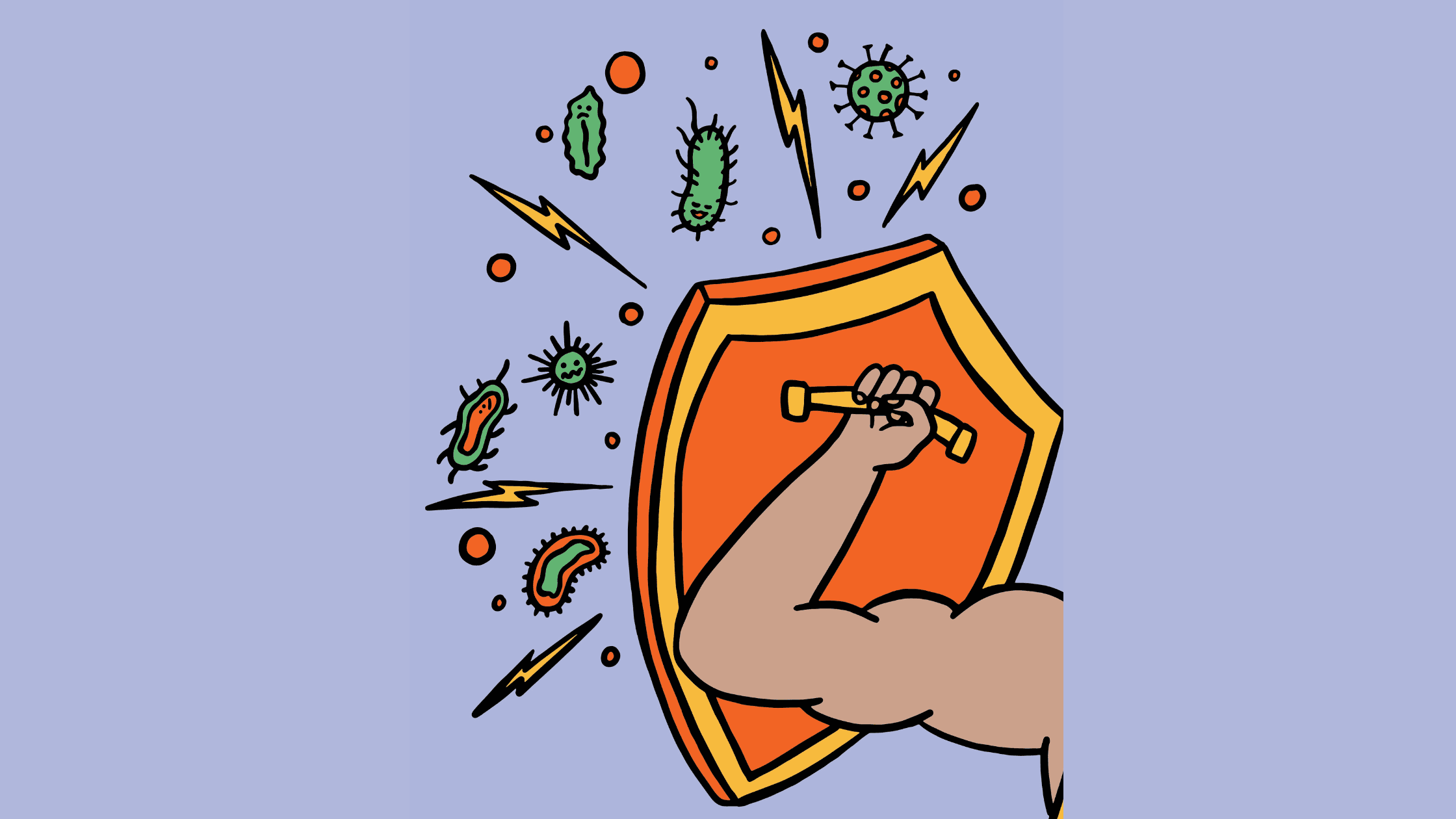
Beta-glucan is an ingredient you’ll see more and more in conversations about immune health, but what is it, how does it work, and why is it different from traditional “immune-boosting” supplements?
Below, we answer the most common questions about beta-glucan using clear language and research-backed insights. Read on for what it is, what the research looks at, and how byMae uses it.
What is beta-glucan?
Beta-glucan is a naturally occurring polysaccharide (a type of fiber) found in cell walls of sources like yeast, oats, mushrooms, and certain algae.
While beta-glucans are often discussed for gut or heart health, specific forms, specifically insoluble yeast beta-glucan, have been extensively studied for their interaction with the immune system. Your innate immune cells recognize its shape, which is why beta-glucan has been studied so extensively in immune research.
What does beta-glucan do in the body?
Beta-glucan interacts with specific receptors on innate immune cells such as macrophages, neutrophils, and natural killer (NK) cells.
Beta-glucan supports your body’s front-line immune function.*
What is trained immunity?
Trained immunity is the scientific concept that the innate immune system (our first line of defense) can adapt and “learn” after repeated exposure to certain signals.
Trained immunity is a kind of memory scientists found in the innate immune system, your first line of defense. Dr. Mihai Netea’s group at Radboud University named it in 2011, and research since then has looked at how innate immune cells respond differently after an earlier encounter.
How is beta-glucan different from traditional immune supplements?
Many immune supplements are designed for short-term, reactive use, often relying on high doses of vitamins taken only when someone already feels run down.
Immunity Training is our practice for proactive health and immunity, built around a simple idea: have a foundation in place before you need it.
- Consistency: Designed for daily use, not just reactive moments.
- Readiness: Focuses on immune readiness rather than reaction.
Is beta-glucan safe for daily use?
A 2021 review of 34 randomized trials of beta-glucans from yeast and mushrooms, taken at up to 1,000 mg a day for up to six and a half months, recorded no side effects caused by the beta-glucan. If you’re pregnant or nursing, we’d hold off on multi+ for adults. Check with your doctor first if you’re being treated for a condition or take medication.
Are there human studies on beta-glucan?
In a study of 109 healthy adults, 250 mg of baker’s yeast beta-glucan helped support the immune system’s response after strenuous exercise, when immune activity can temporarily dip.*
Most research on yeast beta-glucan has been in adults, and some trials have been in children. One trial, published in 2016, gave 174 children aged 1 to 4 in Beijing either baker’s yeast beta-glucan or a placebo for 12 weeks. A 2021 review of 34 trials of beta-glucans from yeast and mushrooms included six in children, and none of the 34 reported side effects caused by the beta-glucan. multi+ for littles hasn’t had a study of its own.
Why does byMae use beta-glucan?
At byMae, we believe resilience doesn’t happen by accident.
multi+ combines daily essentials with clinically-studied beta-glucan and follows a weekdays-on, weekends-off routine. It’s inspired by the award-winning science of trained immunity, which changed what scientists know about the innate immune system’s ability to remember.
How often do you take it?
Immunity Training is byMae’s name for the weekday practice: multi+ Monday through Friday, weekends off.
If you miss a day, pick it up on the next weekday. There’s nothing to make up.
The Bottom Line
It’s not about doing more. It’s about giving your body what it needs, every day. That’s the foundation of immunity training.
Want the full picture of how training beats boosting? Explore the science of immunity training.