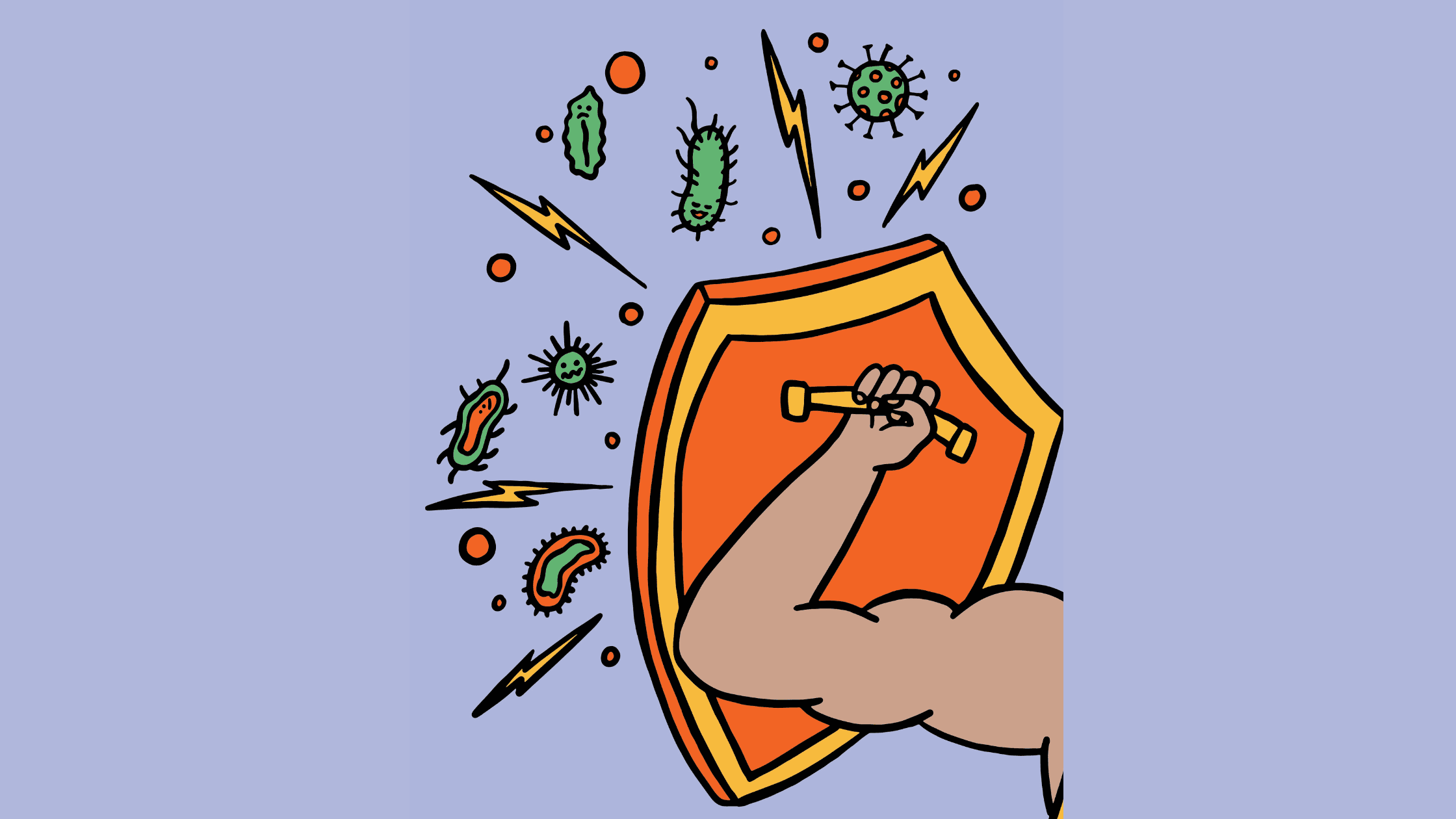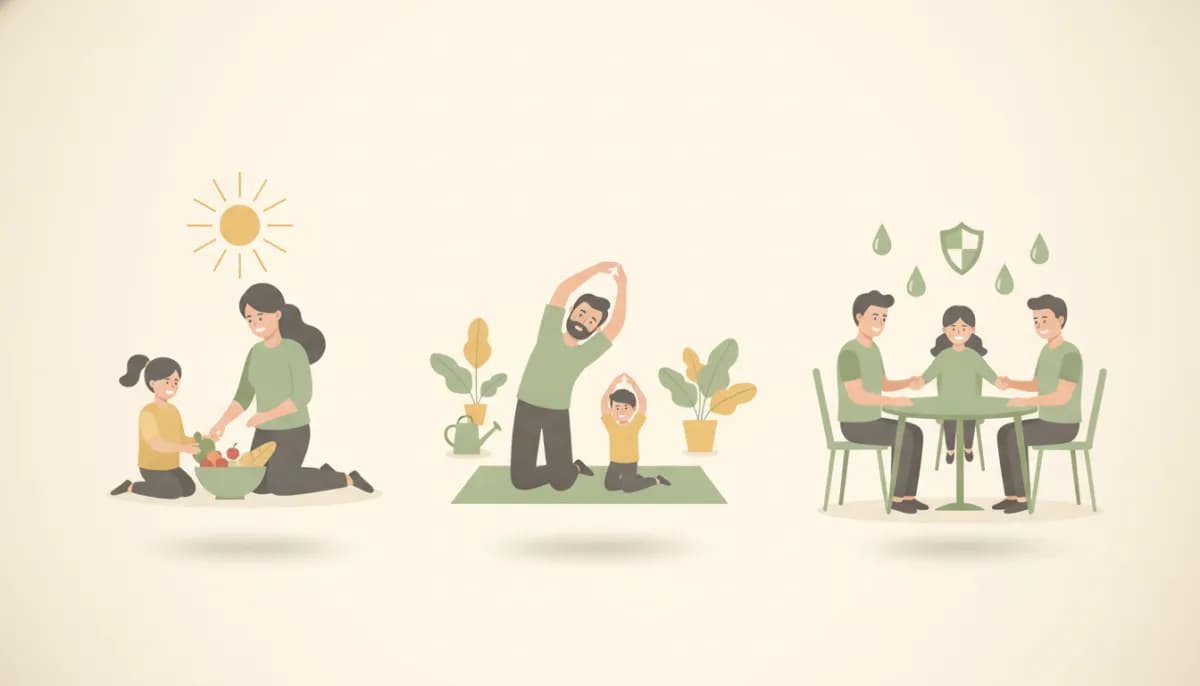

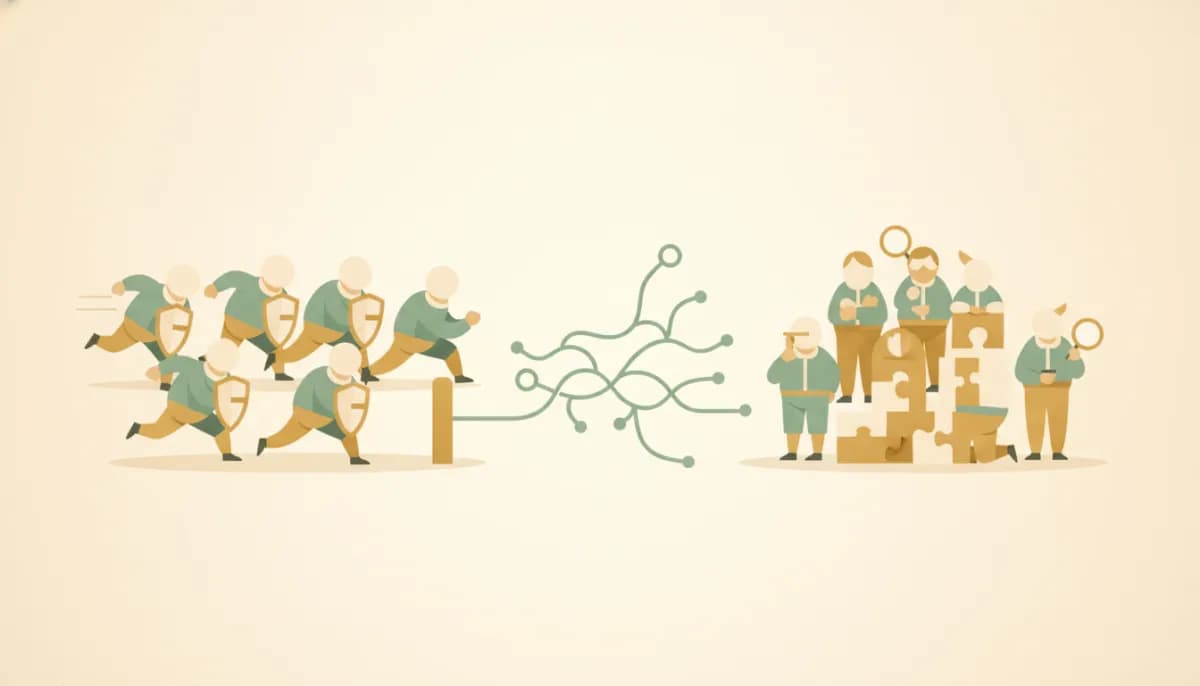
Most of us picture the immune system as a single thing — a wall that's either up or down, strong or weak. The reality is more interesting, and a lot more reassuring: you have two immune systems, working in concert. One is fast and improvisational. The other is slow, precise, and never forgets.
Understanding how these two halves divide the labor is the clearest way to understand the science of trained immunity. So let's meet both teams.
Meet the Two Arms of Your Immune System
Immunologists describe two broad arms of immune defense. They overlap and talk to each other constantly, but each has a distinct job.
- Innate immunity is your body's fast, first line of defense. It responds immediately to anything unfamiliar, but it isn't specific — it acts much the same way against many different invaders. It includes barriers like your skin and mucous membranes, plus white blood cells that react quickly.
- Adaptive immunity is the slower, specialized arm. It takes several days to become fully activated, but it learns from each exposure, tailors its response, and remembers what it has seen so it can respond more effectively the next time.
Neither arm is 'better.' A healthy defense needs both: the innate side holds the line in the first minutes and hours, while the adaptive side builds the precise, long-lasting response behind it.
Innate Immunity: The First Responder
If a germ gets past your skin, the innate system is what meets it first. Think of it as the on-call crew — always on patrol, quick to act, and not fussy about the details.
Its cells, like macrophages and natural killer cells, recognize broad patterns that signal 'this doesn't belong here' and respond within minutes to hours. They don't wait to identify exactly what they're dealing with; speed is the whole point.
The trade-off is precision. Because the innate response is general rather than tailored, it was long assumed to be simple and unchanging — the same blunt reaction, every time. That assumption turned out to be incomplete, which is where the more recent science gets interesting.
Adaptive Immunity: The Team That Learns and Remembers
The adaptive arm is the specialist. It's slower to mobilize — often several days — because it's doing something sophisticated: studying the specific invader and building a custom response to it.
Its T-cells and B-cells learn from each encounter and file away a kind of long-term, largely antibody-based memory. That's why something your body has truly catalogued before can be recognized more efficiently the next time. It's also the principle vaccines are built on — they safely educate the adaptive system, so it has a head start. (byMae fully backs vaccines.)
This is the 'immune memory' most people mean when they use the phrase — durable, specific, and the result of real experience.
The Twist: A Kind of Memory on the Innate Side
For more than a century, scientists believed only the adaptive side could remember. Then researchers found the innate side can learn too: after certain exposures, its cells respond faster and more strongly the next time.
Dr. Mihai Netea's group at Radboud University named this trained immunity in 2011. It overturned a textbook rule and is now studied in labs around the world. Netea won the 2016 Spinoza Prize, the highest science award in the Netherlands.
Where Immunity Training and beta-glucan Fit In
Immunity Training is our practice for proactive health and immunity, built around a simple idea: have a foundation in place before you need it. It's inspired by the award-winning science of trained immunity, which changed what scientists know about the innate immune system's ability to remember.
Beta-glucan is a natural fiber from baker's yeast. Your innate immune cells recognize its shape, which is why scientists have been studying it for decades. multi+ combines daily essentials with clinically-studied beta-glucan and follows a weekdays-on, weekends-off routine.
To be clear about the credit: trained immunity is Netea's discovery, not byMae's. multi+ hasn't had a clinical trial of its own, and no study has measured trained immunity in people taking multi+ or its beta-glucan.
The Bottom Line
Your defense isn't one wall — it's two teams that cover for each other: the fast innate first responders and the slow, precise adaptive specialists. Vitamins C and D, zinc and selenium support normal immune function.*
What's genuinely new: trained immunity research found a kind of memory on the innate side too. Immunity Training, built into your daily multivitamin.
Want the full picture of how training beats boosting? Explore the science of immunity training.